Roofing scams are a significant concern for Florida homeowners, particularly after storms or hurricanes. Fraudsters often target vulnerable buyers with inflated claims, unlicensed contractors, and deceptive tactics. Homebuyers can avoid falling victim to these scams by hiring licensed professionals, verifying insurance claims, and understanding their rights under Florida law. If fraud is suspected, it’s essential to report it immediately to local authorities and insurance companies to prevent further damage.
After a severe storm or hurricane, Florida homeowners are often left to deal with not only the damage to their homes but also the possibility of falling victim to roofing scams. Fraudulent roofing contractors are notorious for exploiting storm damage claims, offering low-ball estimates, or even inflating insurance claims to collect higher payouts. The process of navigating roofing repairs can be overwhelming, and scammers are quick to capitalize on confusion. However, with the right knowledge and tools, homeowners can avoid these pitfalls. This article will walk you through the common roofing scams in Florida, how to protect yourself, and what to do if you suspect insurance fraud.
Quick Start: Pick Your Path
Choose your path to find the relevant section for your needs:
- I’m a homeowner dealing with roof damage: Learn how to spot and avoid common roofing scams.
- I’m facing an inflated insurance claim or fraud: Understand how to handle roofing insurance fraud.
- I want to protect myself from scams in future purchases: Tips on selecting reliable roofing contractors and avoiding fraud.
What Are Common Roofing Scams in Florida?
Roofing scams in Florida often involve unlicensed contractors, inflated claims, and “storm chasers” who show up after hurricanes or storms to offer services, often without proper licensing or insurance.
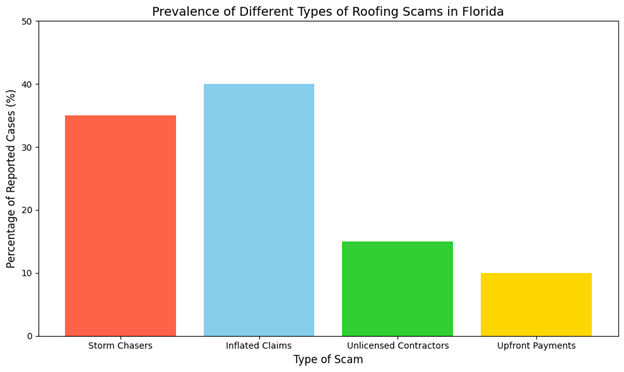
Roofing scams are rampant in Florida due to the state’s vulnerability to hurricanes and storms. Common fraud schemes include:
- Storm Chasers: These are out-of-town contractors who follow severe weather events and approach homeowners offering quick fixes. They often demand large upfront payments and leave without completing work.
- Inflated Claims: Contractors may exaggerate the extent of the damage to your roof, submitting inflated claims to the insurance company.
- Unlicensed Contractors: Some fraudsters operate without proper licenses or insurance, leaving homeowners responsible for any future damage or legal disputes.
Understanding these common scams can help homeowners avoid costly mistakes and ensure they work with reliable professionals.
 How to Spot a Roofing Scam in Florida
Look for red flags like unlicensed contractors, door-to-door solicitations, unusually low quotes, or pressure tactics to sign contracts quickly. Always verify credentials before proceeding.
Many Florida homeowners fall victim to scams because they don’t recognize the warning signs. Here’s how to spot roofing scams:
- Unlicensed or Uninsured Contractors: Always check for proper licensing and insurance before hiring a contractor. You can verify licenses through the Florida Department of Business and Professional Regulation (DBPR).
- Low-Ball Estimates: If a roofing contractor offers a price far below other quotes, it’s likely a scam. Scammers often use low prices to lure homeowners in, only to ask for additional money later.
- Door-to-Door Solicitation: Be cautious of contractors who show up at your door offering immediate repairs or “special deals.” Legitimate contractors don’t usually go door-to-door after a storm.
- Pressure Tactics: Scammers often pressure homeowners to sign contracts quickly. They may insist that repairs must be done immediately or that an offer will expire soon.
If you encounter any of these tactics, take the time to do your research and consider hiring a trusted professional.
 What to Do If You Suspect Roofing Insurance Fraud
If you suspect roofing fraud or inflated insurance claims, immediately report the issue to your insurance company, file a complaint with the Florida Department of Financial Services, and consult an attorney.
Roofing fraud often involves submitting false or inflated claims to insurance companies. Here’s what to do if you suspect you’re dealing with insurance fraud:
- Report to Your Insurance Company: If you believe a contractor has submitted fraudulent claims, contact your insurance company to discuss the issue and provide any evidence.
- File a Complaint: The Florida Department of Financial Services (DFS) accepts fraud complaints and investigates suspected insurance fraud. You can file a complaint through their website.
- Consult an Attorney: In more serious cases, you may need legal assistance. An attorney specializing in insurance fraud can help you navigate complex claims and legal procedures.
Legal Protections for Florida Homeowners Against Roofing Fraud
Florida law provides protections against roofing fraud, including requirements for contractors to be licensed and insured, as well as strict penalties for fraudulent claims.
Florida has strong consumer protections against roofing scams. Key legal protections include:
- Licensing and Insurance: Florida requires roofing contractors to be licensed and carry insurance. Working with unlicensed contractors could leave you liable for future damages.
- Homeowner Bill of Rights: This law protects homeowners by ensuring transparency in contracts, including requirements for contractors to disclose their credentials and provide written estimates.
- Penalties for Fraud: Fraudulent claims and misleading practices can result in severe penalties, including criminal charges, fines, and the revocation of business licenses.
Understanding these protections ensures that homeowners know their rights and can hold contractors accountable for fraudulent actions.
How Can I Avoid Roofing Scams in the Future?
To avoid future roofing scams, always hire licensed contractors, get multiple estimates, read the fine print of contracts, and be cautious of deals that seem too good to be true.
Here are some tips to protect yourself from roofing scams:
- Hire Licensed Professionals: Always ensure that the roofing contractor you hire is properly licensed and insured. Check the Florida DBPR website to confirm their credentials.
- Get Multiple Quotes: Always get at least three quotes for roofing repairs or replacement. This helps you compare prices and avoid low-ball offers.
- Read Contracts Carefully: Don’t sign a contract under pressure. Always read the fine print, and ensure the agreement includes specific details about the work to be done, payment schedules, and warranties.
- Be Cautious of Too-Good-to-Be-True Deals: If an offer seems too good to be true, it probably is. Be wary of contractors offering huge discounts or immediate repairs without a detailed inspection.
Common Mistakes to Avoid When Dealing with Roofing Claims
Avoid mistakes like paying large upfront costs, skipping background checks on contractors, not verifying insurance coverage, or ignoring contract details.
Homeowners often make these mistakes when dealing with roofing claims:
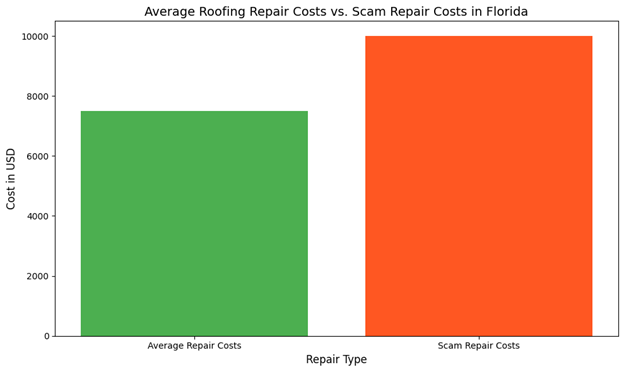
- Paying Large Upfront Costs: Scammers often ask for significant upfront payments. Avoid paying more than 10-15% of the total cost upfront.
- Skipping Background Checks: Always verify the contractor’s license and insurance coverage. This ensures that you’re protected in case of future issues.
- Ignoring the Contract: Don’t sign a contract without understanding all the terms, including the scope of work and payment schedule.
- Not Insisting on a Written Estimate: Always get a written estimate before agreeing to any work. This helps protect you from unexpected charges.
FAQ Section
How do I know if a roofing contractor is licensed in Florida?
You can verify a contractor’s license by checking the Florida Department of Business and Professional Regulation (DBPR) website. All roofing contractors must be licensed to operate in Florida.
What are the signs of roofing fraud?
Signs of roofing fraud include unsolicited door-to-door offers, unusually low estimates, contractors requesting large upfront payments, and pressure tactics to sign contracts quickly.
What should I do if a contractor is demanding more money than originally quoted?
If a contractor demands more money than the original estimate, stop all work immediately and contact your insurance company and the Florida Department of Financial Services.
Can I file an insurance fraud report online?
Yes, you can file a fraud complaint online with the Florida Department of Financial Services through their website. They investigate suspected fraud cases and protect homeowners from scams.
How can I prevent roofing scams after a storm?
To prevent scams, always hire licensed contractors, get multiple estimates, and be cautious of anyone offering “special deals” right after a storm. Verify all credentials before agreeing to any work.
Closing Section
Roofing scams in Florida are a serious concern for homeowners, especially after storms and hurricanes. By understanding common scams, knowing your legal protections, and being vigilant when selecting contractors, you can protect yourself from fraud. If you’re unsure about your roofing repairs or insurance claims, it’s always a good idea to reach out to a trusted mortgage professional for guidance. Don’t wait until it’s too late—ensure your home and finances are protected today.
Sources & References:
- Florida Department of Financial Services — Roofing and Homeowner Fraud: myfloridacfo.com
- Florida Department of Business and Professional Regulation — Licensed Roofing Contractors: myfloridalicense.com
- Consumer Protection — Florida’s Roofing Scams and Fraud Prevention: consumer.ftc.gov